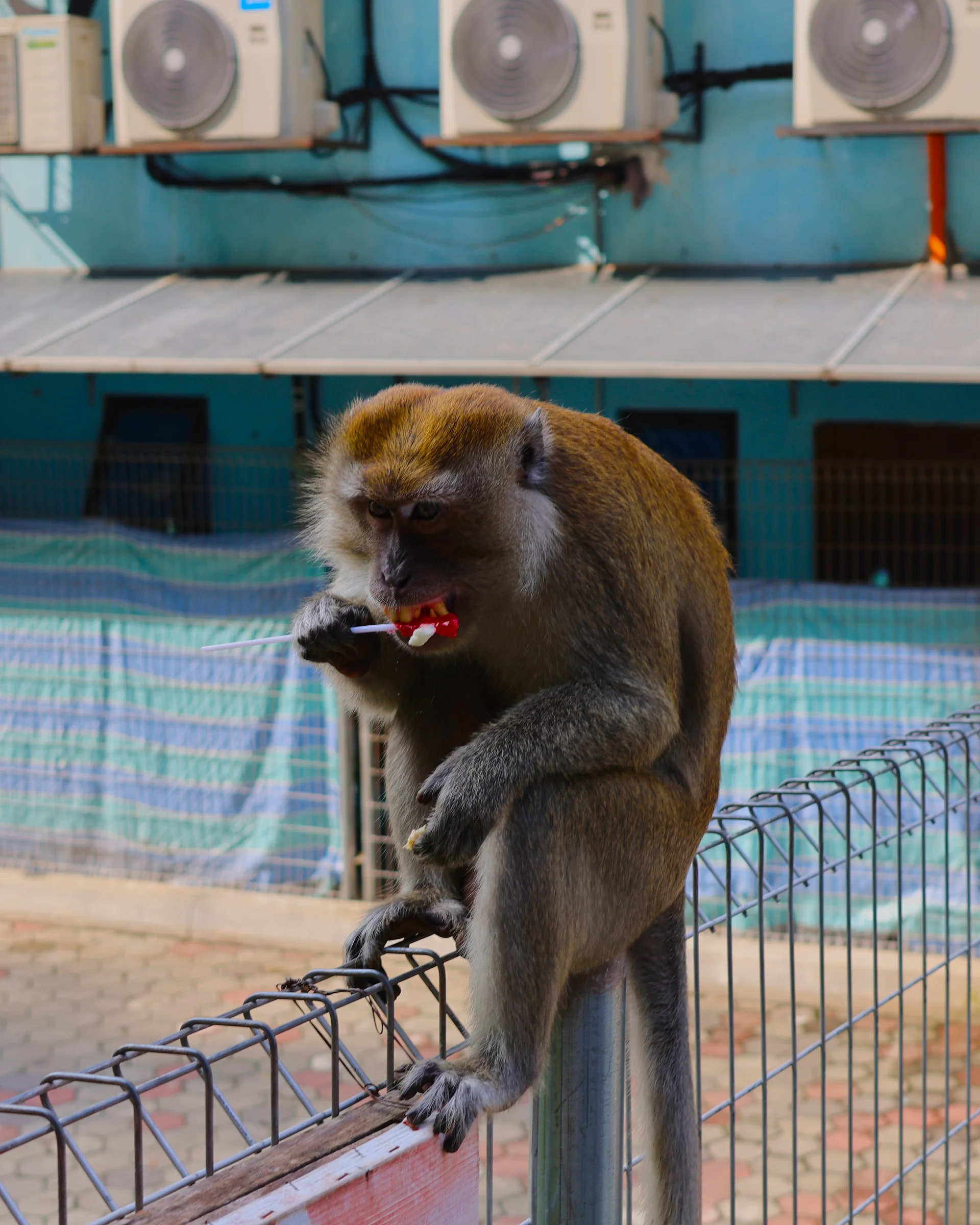
Popsicle brunch at Batu Caves
Batu Caves, Selangor, Malaysia26 September 2026
A long-tailed macaque (Macaca fascicularis) balances on a metal fence at Batu Caves, Malaysia, holding a partially eaten red popsicle. Its narrowed eyes and concentrated expression give it an almost villainous appearance, as though it has just pulled off a particularly satisfying theft. Whether the frozen treat was offered by a visitor or acquired through less diplomatic means remains a mystery.
The macaques of Batu Caves are well known for their bold interactions with tourists, frequently approaching visitors in search of food and occasionally snatching snacks or belongings. These highly intelligent and adaptable primates naturally consume fruits, seeds, insects and other foods, but those living around popular tourist attractions can become accustomed to processed human snacks.
Although an occasional popsicle may seem harmless, sugary processed foods are poorly suited to a macaque's natural diet. Frequent consumption can contribute to nutritional imbalances, dental problems and excess calorie intake. More importantly, feeding wild macaques encourages them to associate people with food, increasing the likelihood of aggressive encounters and food stealing. At Batu Caves, this creates an ongoing challenge for wildlife management, as close contact between monkeys and visitors becomes increasingly normalised.
For this particular macaque, however, the nutritional debate appears to be of little immediate concern. The popsicle has its full attention.
Usage and releases
An authorized download grants each public license marked Yes above, subject to its terms. Learn about usage.
Photo Details
Loading photo details…